Hannah's Persistent Prayer
Year after year, she was childless. Year after year, she went to the temple and prayed. One day, she made a vow that changed everything. Hannah's story is what persistent, surrendered prayer looks like.
Choose Your Experience
Hannah's Persistent Prayer
The Hook
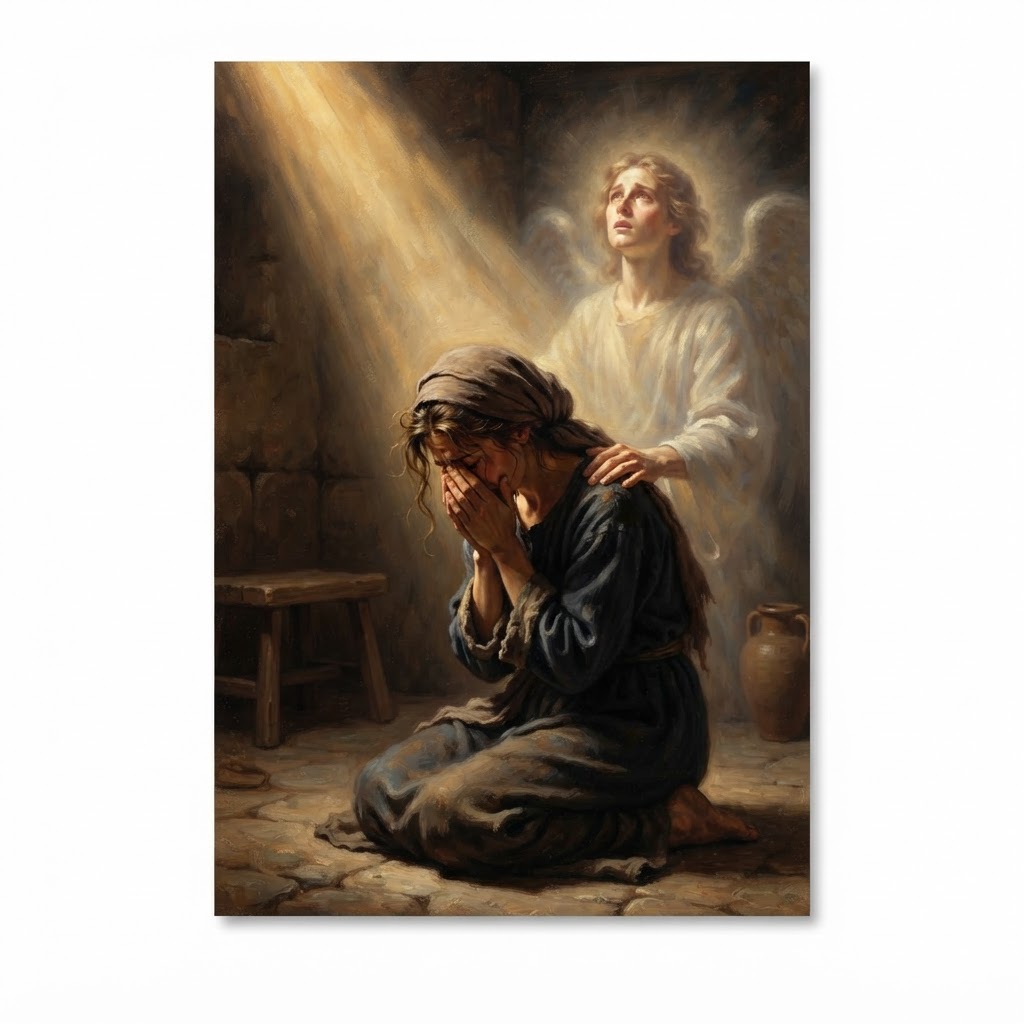
She wept. She couldn't eat. Year after year, she went to the house of the LORD and poured out her heart. Her husband's other wife mocked her. Her husband tried to comfort her: "Am I not better to you than ten sons?" But nothing filled the ache. Then she made a prayer that was also a promise — and God answered.
The Story
Hannah was one of two wives of Elkanah. The other wife, Peninnah, had children. Hannah had none. In ancient Israel, barrenness was considered a curse, a source of shame. And Peninnah made sure Hannah felt it:
"Because the LORD had closed Hannah's womb, her rival kept provoking her in order to irritate her. This went on year after year. Whenever Hannah went up to the house of the LORD, her rival provoked her till she wept and would not eat" (1 Samuel 1:6-7).
Elkanah loved Hannah. He gave her a double portion. He asked, "Hannah, why are you weeping? Why don't you eat? Why are you downhearted? Don't I mean more to you than ten sons?" His comfort was genuine but inadequate. No husband, no matter how loving, could fill the gap that only God could fill.
The Prayer:
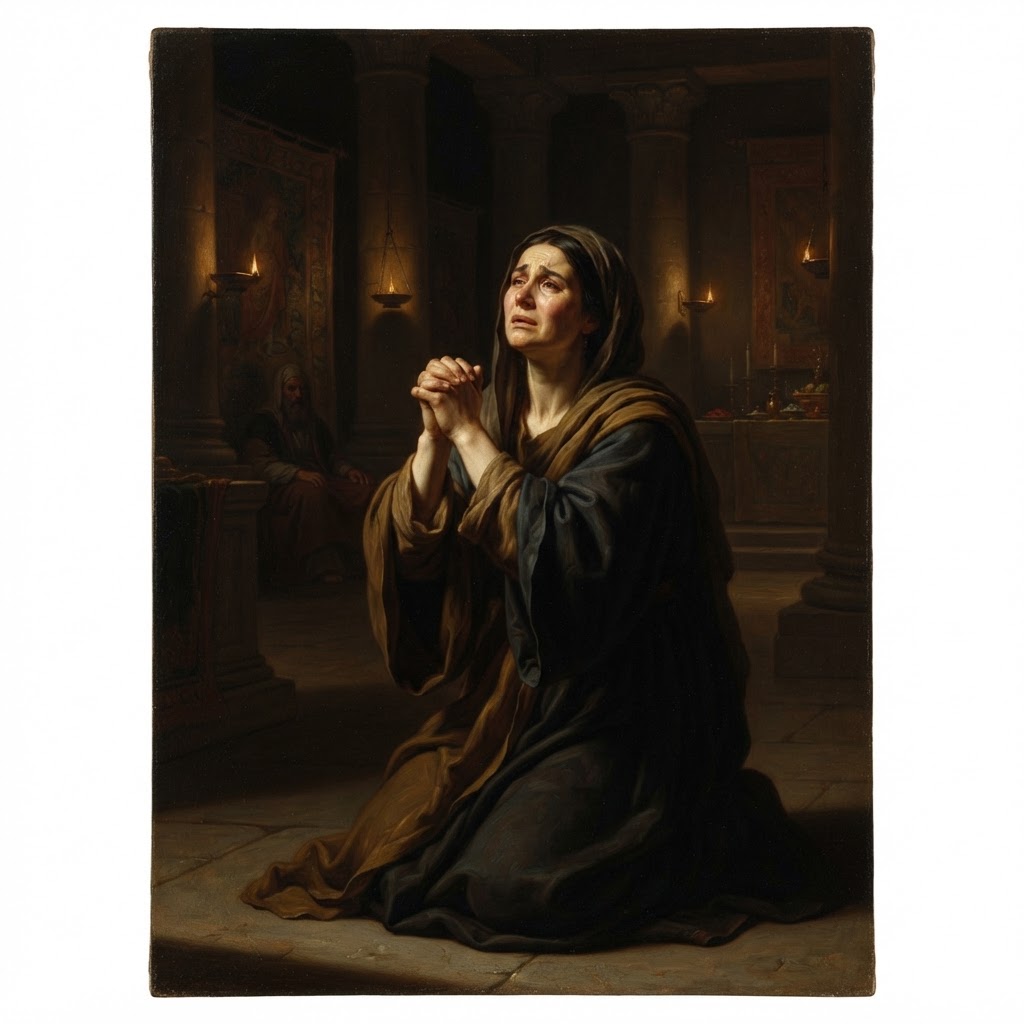
At Shiloh, after the meal, Hannah stood up. Eli the priest was sitting in his chair by the doorpost. Hannah was "deeply troubled" and "prayed to the LORD, weeping bitterly."
She made a vow:
"LORD Almighty, if you will only look on your servant's misery and remember me, and not forget your servant but give her a son, then I will give him to the LORD for all the days of his life" (1 Samuel 1:11).
Notice: she didn't demand. She didn't bargain manipulatively. She opened her heart, asked honestly, and then surrendered the outcome. "If You give, I give back." She was offering the very thing she was asking for.
Eli saw her lips moving but heard no voice. He thought she was drunk. "How long are you going to stay drunk? Put away your wine!"
Hannah answered: "I am a woman who is deeply troubled. I have not been drinking wine or beer; I was pouring out my soul to the LORD. Do not take your servant for a wicked woman; I have been praying here out of my great anguish and grief."
Eli responded: "Go in peace, and may the God of Israel grant you what you have asked of him."
Hannah went her way, ate something, and "her face was no longer downcast." Before the answer came — before she was even pregnant — her countenance changed. She trusted Eli's blessing. She trusted God.
The Answer:
She conceived. She had a son and named him Samuel, "Because I asked the LORD for him." When Samuel was weaned, she brought him to the temple and gave him to Eli, just as she had promised.
Her prayer of praise in 1 Samuel 2 is one of the most powerful songs in Scripture — a model for Mary's Magnificat centuries later.
The Lesson
1. God allows what He will ultimately redeem. Hannah's barrenness wasn't punishment — it was preparation. God was preparing a mother for the prophet who would anoint Israel's first kings. The wait wasn't wasted.
2. Pouring out your soul is enough. Hannah's prayer had no eloquent words. It was raw, tearful, barely audible. She "poured out her soul to the LORD." God doesn't need polished prayers — He needs honest ones.
3. Surrender is the key. Hannah's vow wasn't a bargain — it was a surrender. "If You give, I give back." She was willing to receive the answer and then release it. That kind of surrendered prayer moves God.
4. Peace precedes the answer. "Her face was no longer downcast" — before she was pregnant. She found peace before the answer came. That's the mark of surrendered prayer: trusting before seeing.
Key Takeaways
- Persistent prayer is poured-out prayer. Don't mask your pain. Bring it. Pour it out.
- Surrender the outcome. What if you offered to give back whatever God gives you?
- Peace can come before the answer. Surrendered prayer brings peace, not necessarily immediate results.
- Mockery doesn't stop the answer. Peninnah's mockery, Eli's misunderstanding — none of it stopped God from answering. Your critics don't determine your outcome.
Real-Life Application
- When you've been praying for years: Don't give up. But also, examine your posture: are you demanding or surrendering?
- When mocked or misunderstood: People may misjudge your prayer life — even religious leaders, like Eli. Keep pouring out your soul to God.
- When you receive the answer: Remember Hannah. She gave her son back. Whatever God gives you — a child, a job, a dream — offer it back to Him. It was always His.
Closing Prayer
Lord, I've been pouring out my soul to You about [name your request]. I've been weeping, anguishing, waiting. Like Hannah, I surrender the outcome. If You answer, the answer is Yours — not mine. Give me peace before the answer comes. And when it comes, let my first response be worship, not just relief. Amen.
Memory Verse
"I was pouring out my soul to the LORD." — 1 Samuel 1:15
Next Episode
In Episode 4, we explore Daniel's Unshakable Prayer Life — what happens when prayer becomes illegal.
Key Takeaway
Persistent prayer doesn't mean demanding what you want — it means bringing what you want to God and surrendering the outcome. Hannah's answer came when she prayed with openness, not desperation.
Family Discussion
1. Hannah prayed for years before her answer came. What have you been praying for that feels like it's taking forever?
2. Hannah's rival Peninnah provoked her. How do the 'Peninnahs' in your life — people or circumstances that mock your pain — affect your prayer life?
3. Hannah promised to give her son back to God. What would it look like to pray with surrendered, not demanding, expectations?
4. After Hannah received her answer, she worshipped. How does answered prayer lead to worship?
Quick Quiz
Sign in to test your knowledge and track your progress.
Sign In to Take Quiz