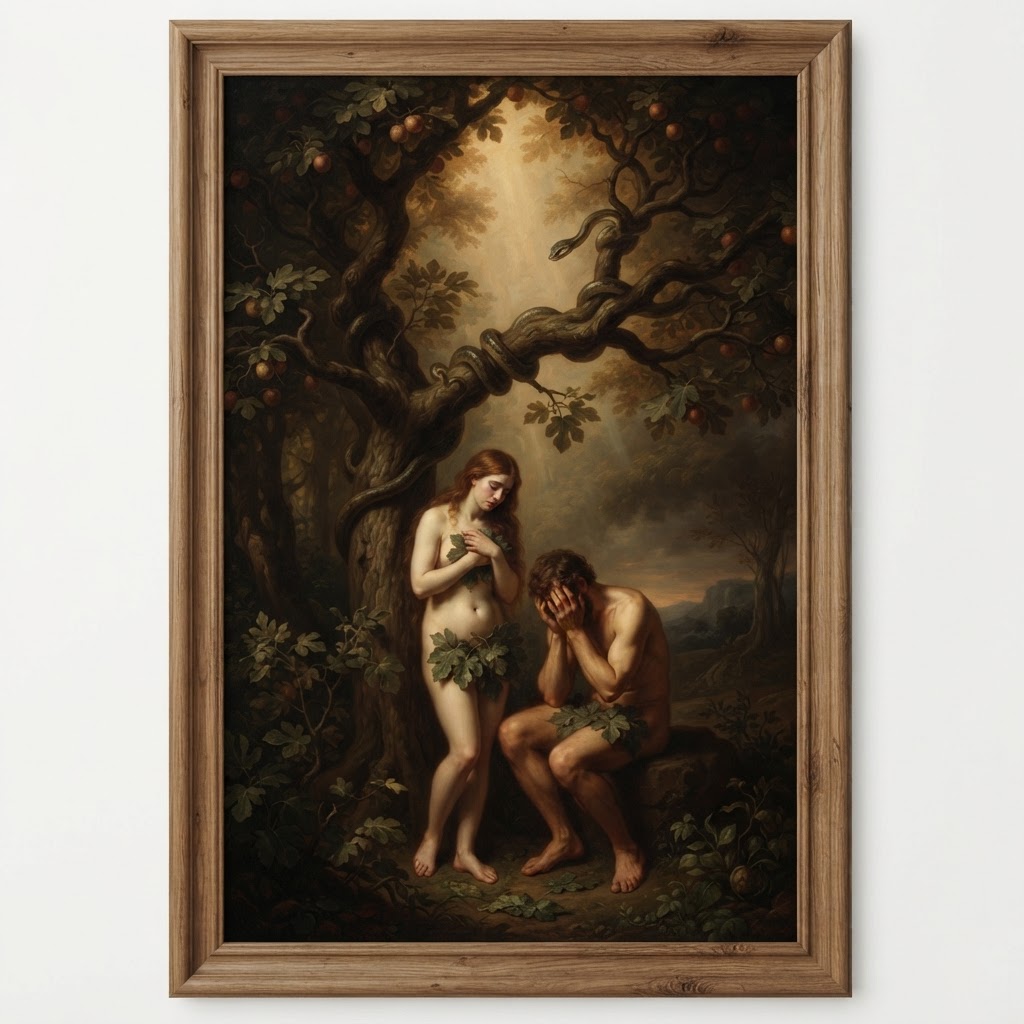
Day 2: The Fall of Humanity
Adam and Eve disobey God in the garden, and sin enters the world, leading to the first act of murder between their sons.
Choose Your Experience
Introduction: The Turning Point of History. Following the majestic account of Creation in Genesis 1-2, where the cosmos was formed and humanity was commissioned as stewards, we arrive at the somber reality of Genesis 3. This is the pivot point of the biblical narrative—the movement from 'very good' to 'broken.' We are currently in the Primeval History (Genesis 1-11), setting the stage for the necessity of God's covenantal rescue. ## Scripture in Focus: Genesis 3-4. Genesis 3 opens with the subtlety of the serpent, who introduces doubt regarding God’s word: 'Did God really say?' The temptation is a challenge to God’s goodness and authority. Eve and Adam’s act of eating the fruit was not merely about a dietary restriction; it was a rejection of God as the arbiter of truth. By eating, they sought to become their own moral standard. The result is immediate: shame, hiding, and blame-shifting. In Genesis 4, the brokenness migrates from the relationship between God and humanity to the relationship between brothers. Cain’s murder of Abel reveals the rapid disintegration of human harmony under the weight of sin. Yet, even in judgment, God acts with grace—providing clothing for Adam and Eve, and placing a mark on Cain to protect his life. ## Key Themes: 1. The Deception of Autonomy: Sin is fundamentally the desire to function independently of God’s design. 2. The Nature of Shame: Sin replaces the intimacy of divine presence with the isolation of shame. 3. Protoevangelium: Genesis 3:15 provides the first hint of the Gospel, promising an offspring of the woman who will crush the serpent’s head—a prophecy fulfilled in Christ. 4. The Escalation of Evil: We see how quickly envy and rejection of God leads to systemic violence. ## Going Deeper: The Hebrew term 'nachash' (serpent) denotes a deceptive creature, foreshadowing the 'ancient serpent' of Revelation. The 'kethoneth 'or' (garments of skin) is significant; it signifies the first sacrifice in history, foreshadowing the necessity of blood atonement. The Hebrew word for sin in Genesis 4:7, 'chattath,' is described as crouching at the door, personifying sin as a predatory force that must be mastered. This passage demonstrates that while human nature is marred by the Fall, God remains the pursuer of His image-bearers. ## Application for Today: The Fall is not a historical relic; it is a daily reality. We often struggle with the same temptation: defining good and evil on our own terms rather than trusting the Creator’s definition. Today’s study calls us to abandon the 'hiding' that characterized Adam and Eve and move into the transparency of repentance. When we feel the weight of our own 'Cain-like' impulses—jealousy or anger—we must remember that the same God who addressed Cain is inviting us to 'master' these impulses through the power of His grace. ## Reflection and Prayer: Ask yourself: Where am I attempting to define truth apart from God’s Word? What 'shame' am I currently hiding from God instead of bringing to Him for healing? Prayer: Lord, thank You for Your relentless pursuit of me. Even when I choose my own way, You offer me garments of grace. Help me to trust Your wisdom over my own desires and to walk in the light of Your redeeming love, Amen.
Key Takeaway
The Fall depicts humanity's tragic rejection of God's authority, yet it simultaneously initiates God's eternal plan to redeem His people through the sacrificial promise of a future Savior.
Family Discussion
1. How does the serpent's strategy of questioning God's word mirror the temptations we face in our modern culture?
2. Why do you think God asked Adam and Eve questions ('Where are you?', 'Who told you you were naked?') when He already knew the answers?
3. Compare the shame felt by Adam and Eve with the grace shown by God in providing them garments. What does this teach us about God's reaction to our sin?
4. How can we apply the lesson of Genesis 4:7—mastering sin—in our practical daily struggles with anger or envy?
Quick Quiz
Sign in to test your knowledge and track your progress.
Sign In to Take QuizMore from This Series

Bible in a Year
Day 1: The Beginning of Everything
18 min
Bible in a Year
Day 3: The Generations Before Noah
18 min
Bible in a Year
Day 4: The Great Flood Begins
18 min
Bible in a Year
Day 5: Gods Promise After Flood
18 min

Bible in a Year
Day 6: The Call of Abram
18 min

Bible in a Year
Day 7: Gods Covenant With Abram
18 min
Bible in a Year
Day 8: Judgment on Sodom
18 min
Bible in a Year
Day 9: The Birth of Isaac
18 min
Bible in a Year
Day 10: A Wife for Isaac
18 min
Bible in a Year
Day 11: The Life of Job
18 min
Bible in a Year
Day 12: Jobs Three Friends Speak
18 min
Bible in a Year
Day 13: Jobs Response to Friends
18 min
Bible in a Year
Day 14: Jobs Plea for Mediation
18 min
Bible in a Year
Day 15: Zophar Challenges Job
18 min
Bible in a Year
Day 16: Jobs Deepest Despair
18 min
Bible in a Year
Day 17: Accusations of Wickedness
18 min
Bible in a Year
Day 18: Jobs Search for Justice
18 min
Bible in a Year
Day 19: Gods Wisdom in Suffering
18 min
Bible in a Year
Day 20: The Complexity of Suffering
18 min